
Finding a Boarding Facility or Petsitter for Your Rabbit(s)
Going out of town and worried about your rabbit? Fear not! Finding a boarding facility may be an option to make sure your rabbit(s) remain spoiled and taken care of. Just like finding a veterinarian for your rabbit, it can take some time to find a reliable caretaker, too. A good place to start is to ask for recommendations from other rabbit owners and rabbit special interest groups like the San Diego House Rabbit Society. Some cities have local rescues and non-profits that offer boarding services, exotic veterinarians that see rabbits may offer boarding as well, and people may offer boarding out of their homes as a small business. Take the time to explore your options, select a few to call and ask questions, and make sure the choice is right for you and your bun(s).
Just like finding a good rabbit-savvy veterinarian, you will need to discern the level of knowledge and experience a boarding facility has with rabbits and how they will communicate with you. When prompted, they should be able to describe housing set up, diet, medical needs or special care, behavior, and what steps they will take in case of a medical emergency. What requirements do they have for clients and their rabbits? What supplies will they provide and what will they need you to bring? Will there be other animals in the building and if so, does the facility have the ability to house rabbits away from barking dogs and the odors of cats? If they initiate and ask you for details, it’s a good sign they will take your rabbit(s) individual needs into consideration and may be worth paying the extra price.

Making Sure the Buns are Ready in Time for Your Vacation
After finding a caretaking option, your next goal is to maintain your rabbit(s) health and care notes. Rabbits should:
Be kept up-to-date with their annual RHDV2 vaccinations. If it has been over a year since their last vaccine, they will need to restart the 2-dose series, and the time it takes to bring them back up-to-date may disqualify them from boarding in time for your trip.
See a veterinarian for an annual physical exam to make sure they remain healthy, or if they have a medical condition, that it is managed and stable.
Be on a monthly flea preventative like Revolution, which can be prescribed by a rabbit-savvy veterinarian. Even 100% indoor rabbits can encounter fleas while in their carrier on their way to the vet or boarding, or from us entering our homes after going on a walk. Giving them a layer of protection with flea prevention ensures that parasites are not able to establish a viable population even if your rabbit encounters them.
Be fixed so they may have fewer hormonal and behavioral changes. Adjusting to changes in environment can be stressful for a rabbit- not being spayed/neutered can add further unpredictability to the mix. (This is not required for boarding with most options, but is generally recommended)

If you are located in San Diego, check out boarding services offered through San Diego House Rabbit Society. We are happy to meet and help take care of your rabbit(s), including providing accommodations for special needs, administering medications, and grooming services. In addition, your support goes back to our shelter rabbits and their medical costs.
What are examples of questions I should ask a boarding facility like a local rescue or vet clinic? What are examples of responses I should look for?
How many rabbits are seen at the facility each week/month?
→ Knowing they see rabbits regularly helps you gauge their experience with rabbits.
What requirements do you have for rabbits to board at your facility? Do You require vaccine records or veterinary history?
→ Reputable caretakers will often request complete RHDV2 vaccination history and veterinary records. For example, rescues like San Diego House Rabbit Society require this information to understand your rabbit’s health history and determine whether additional precautions—such as the use of personal protective equipment (PPE)—are needed to reduce disease risk.
What measures do you have in place to keep rabbits safe from RHDV2 and other illnesses?
→ A reputable caretaker should be familiar with Rabbit Hemorrhagic Disease Virus and explain disinfecting practices and risk reduction measures. Some examples include: up-to-date vaccinations, indoor housing, and disinfecting measures between clients.
What housing arrangements do you have for rabbits, particularly in relation to other animals?
→ Rabbits are prey animals and should not be housed in rooms with predators like cats and dogs.
How are living areas disinfected between animals?
→ A cleaning solution like Rescue. Common disinfectants like a vinegar-water solution are not strong enough to disinfectant illnesses such as RHDV2.
If you house rabbits with potentially contagious medical conditions, are they kept in a separate quarantine space? How do you prevent the spread of illness?
→ Ideally, a combination of a cleaning solution like Rescue and wearing PPE such as gloves and a change of clothes when cleaning spaces and handling quarantine animals.
What do you do if a rabbit becomes stressed or injured?
→ Their response should show calm, informed decision-making and readiness to act appropriately.
Ask them what constitutes a medical emergency and what they would do for your rabbit.
→ This is a good time to bring up particular courses of action you would like them to take, such as calling your or emergency contacts immediately and if it is a medical emergency, start the process of seeing an exotic veterinarian.
What do you look for to indicate GI stasis and can my rabbit be seen by a vet in case it occurs? (Lethargy, decreased appetite, smaller and less stool production.)
Can you administer medications or provide any special needs care?
→ Always double check this if your rabbit requires medications so they don’t miss prescribed treatments at detriment to their health.
Do you also offer grooming and nail trimming services for boarding clients, and if so, what tools do you use?
→ If they do, ensure they disinfect grooming tools between uses to prevent potential disease spread.
How much attention can you give my rabbit(s) on a daily basis?
→ An ideal answer will vary depending on you and your rabbit’s needs- a rabbit with medical or behavioral needs will fare better with a caretaker that can provide more time and attention.
Finally, ask about prices, but don’t let this be a deciding factor. Finding a knowledgeable boarding option with whom you feel confident and who can communicate well with you can be worth paying the extra price.
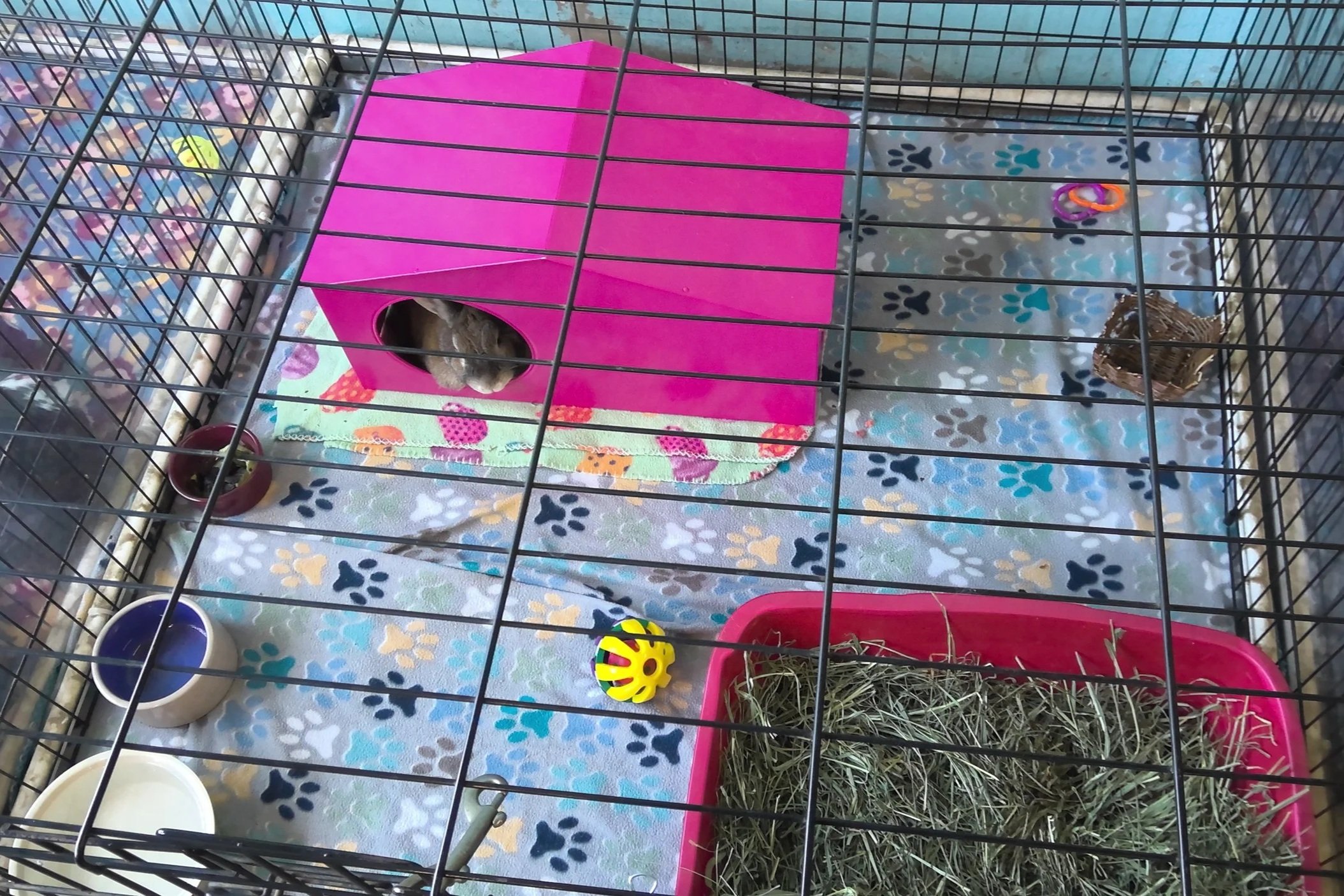
Boarders Honey & Leo in the hidey house provided while boarding at SDHRS. Their family also bought willow chew toys from the SDHRS store for them to enjoy!
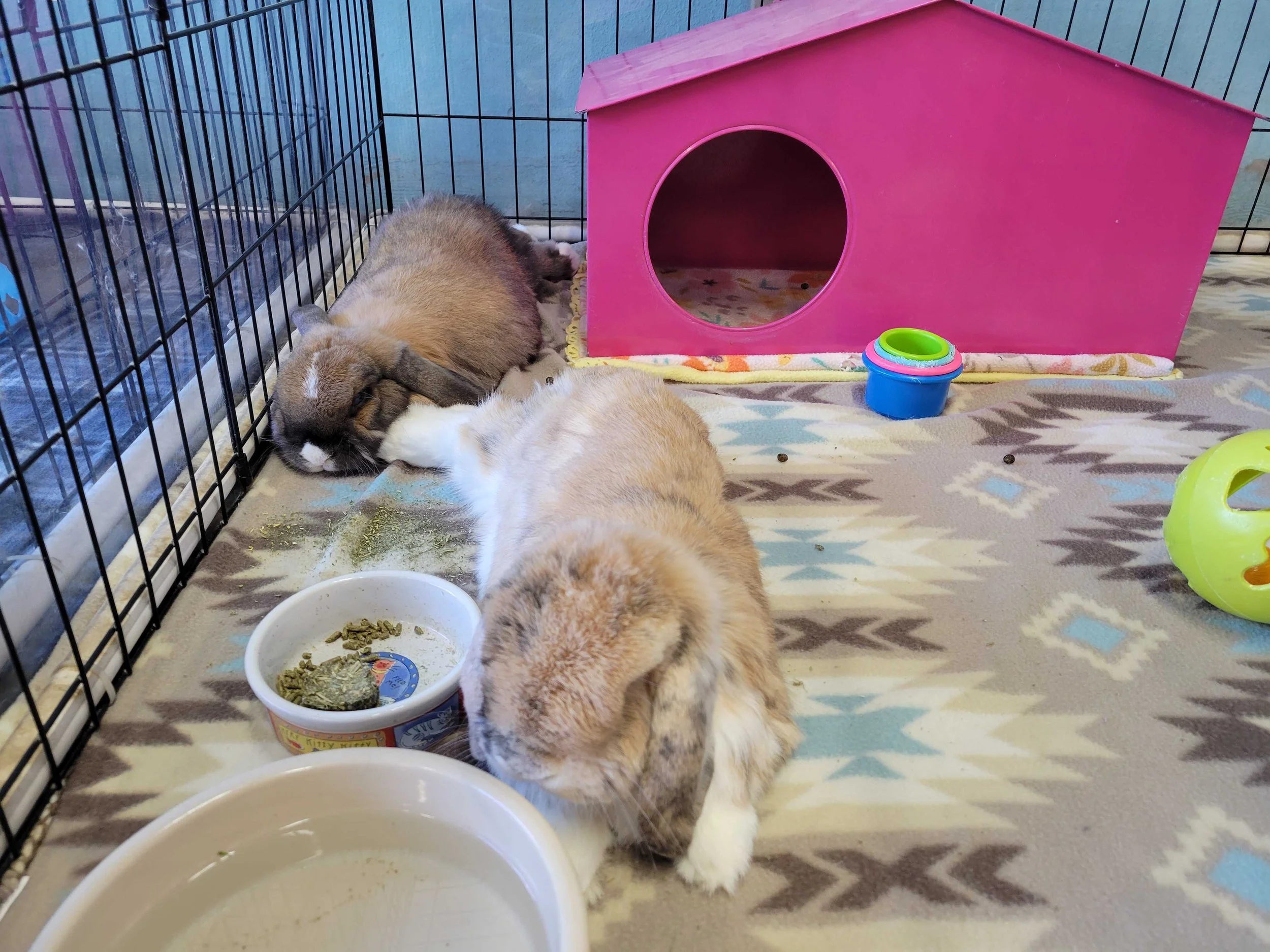
Boarders Tiramisu and Poptart lounging in their pen while boarding at SDHRS.
Having a Petsitter Visit Your Bun(s) at Home
What if all boarding options are full? There are many ways to find someone to help care for your pets at home while you are out of town, including apps like Rover, networking in Facebook groups, finding a neighborhood petsitter, and reaching out to friends and family. Some of these options can be hit-or-miss, especially if your rabbit requires special care like specific handling instructions, medications, or treatments of any kind. If your rabbit requires any specialized care, it’s best to board them somewhere with trained professionals who can provide expert care.
If you don’t live near a reputable rescue or boarding facility and need help screening potential bunny sitters, here are some recommendations to aid you in your search in addition to asking the questions above.
Do’s:
Choose a Sitter Comfortable with Rabbits: Not all sitters are familiar with rabbits, so reach out directly to potential sitters to ensure they are open to learning about bunny care. If your rabbit(s) have medical needs or complex handling, it is better to board them at a vet or shelter that specializes in rabbits or exotic animals.
Have the Sitter Meet Your Rabbit: Invite the sitter over to meet your rabbit before booking. Pay attention to how they interact—if they seem uncomfortable, flinch a lot, or struggle to handle your rabbit, it is likely not a good match.
Be Very Specific in Your Instructions: Rabbits have unique needs, so give clear, detailed instructions:
No outdoor time, ever—predators and RHDV2 (Rabbit Hemorrhagic Disease Virus Type 2) are major risks and can lead to injury, illness, or possible escape.
Only rabbit-safe food, unlimited hay, and fresh water.
Include how often and for how long the sitter should check in on your rabbit.
Key signs to watch for in an emergency, how to contact the right people, and tips for safely prepping your rabbit and getting them into a carrier for transport.
Check Reviews and Experience: Not every sitter will have experience with rabbits. Look for sitters with small pet experience and check their reviews to ensure they’ve cared for rabbits before.
Start Small: Try out a sitter for a short period of time first, like a weekend trip for 2-3 nights before a long multiweek vacation. This helps you gauge their ability to follow instructions and communicate with you before committing to a long trip. See how the sitter does and if both you and the sitter feel comfortable, you can move forward with them consistently.
Don’ts:
Don’t Assume Sitters Know Rabbit Care: Rabbits need very specific care, and many sitters may not know how to handle them properly. Don’t assume they’ll understand the nuances of rabbit care—especially if your bunny needs medication or special attention.
Don’t Skip the Meet-and-Greet: If a sitter seems hesitant or unsure handling your bunny, don’t skip the meet-and-greet. It is crucial to make sure the sitter is confident and comfortable with your pet.
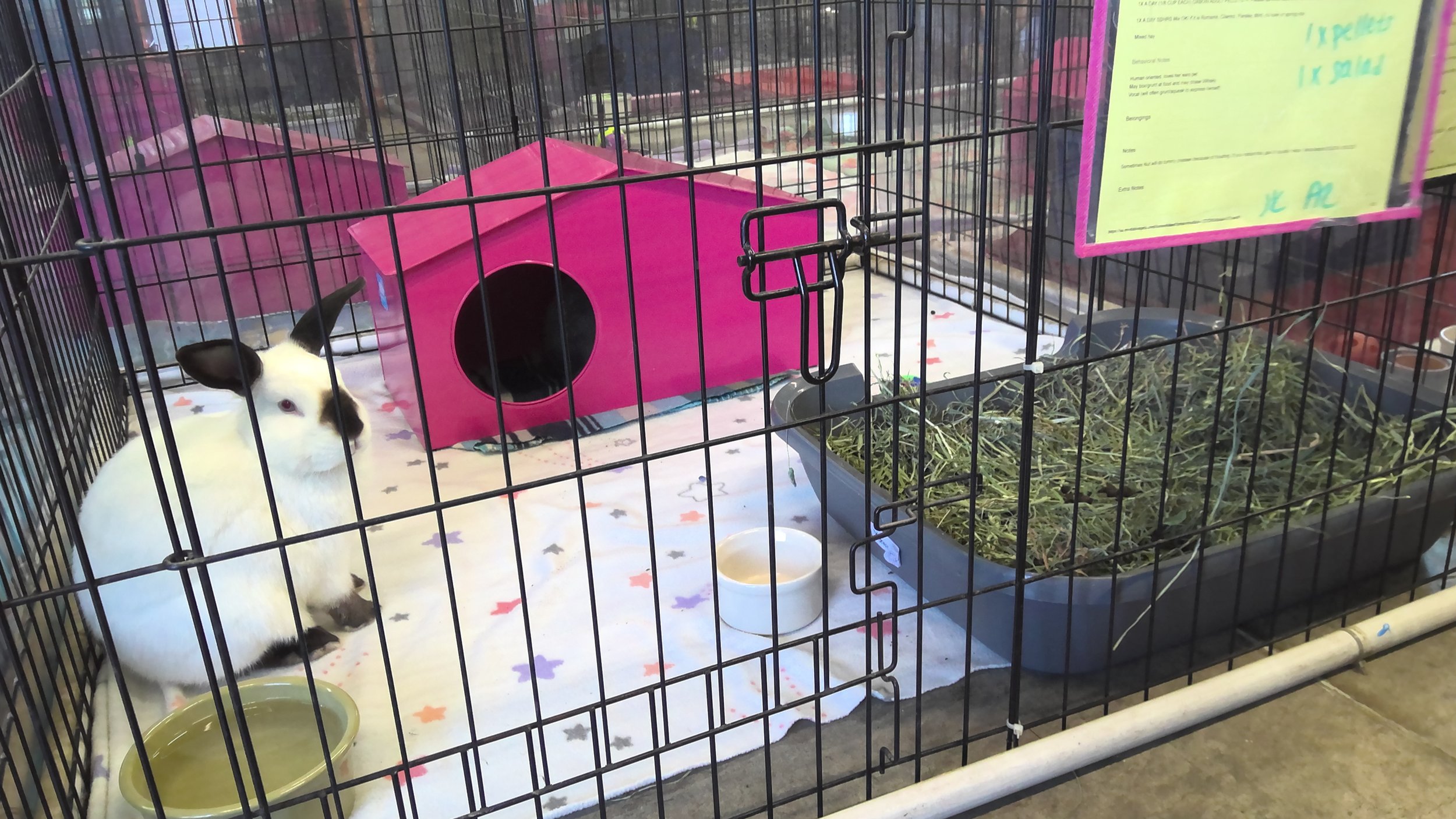
Boarders Nut (in the hidey) and Whisky just before feeding time while boarding at SDHRS.
In conclusion, while Rover, neighborhood petsitters, and finding people through Facebook groups can be a great choice for some pets, bunnies require special care. If your rabbit has medical needs or requires specific handling, a vet or rescue with boarding services may be a better option. No matter if you find accommodations for your rabbit(s) with a boarding facility, veterinarian clinic, or an individual, make sure they are well-prepared and fully understand the needs of your rabbit(s) so you have peace of mind while away from your beloved furry friends.