All About Hay (Part 2)
An unlimited supply of fresh grass hay is the single most important part of a healthy rabbit diet. In fact, most adult rabbits should be eating 85 percent of their diet in hay. Throughout their lives, rabbits need access to hay, but the amount and type of hay varies based on age, development, and individual health needs. Check-in with your rabbit-savvy vet about adjusting your rabbits’ diet to meet their needs. The following guidelines can help:
Rabbits should always have hay available to them.
Young rabbits should be introduced to hay as soon as they can eat on their own.
Babies, nursing mothers, and elderly or injured rabbits can have alfalfa hay (usually too nutrient-dense for healthy adult rabbits).
Adult rabbits thrive on mixed grass and timothy hay because it is lower in calories and calcium than alfalfa.
There are several hay varieties to choose from, and SDHRS recommends a blend of timothy and orchard hays as a good base. Meadow grass, ryegrass, and oat grass are also good options. A “mix” of these recommended hays provides the healthiest diet for your rabbit and can be purchased directly from the SDHRS Bunny Store.
Whether you’re picking up where you left off from our first article about hay or just beginning your journey into the world of hay, this guide will introduce you to the different types of hay that can add variety and important nutrition to your rabbit’s diet. Each type brings unique flavors, textures, and health benefits to keep your rabbit’s meals interesting and support their well being. Discovering the range of hay options can help lead you to the perfect mix that nurtures your rabbit’s contentment and vitality.
Types of Hay for Rabbits
Offering different types of hay not only keeps mealtime interesting for your rabbit - it also provides important nutritional benefits. Each kind of hay brings its own unique flavors, textures, and nutrients. Mixing hays can encourage picky eaters to eat and ensure your rabbit enjoys a wider range of essential micronutrients.

Timothy Hay
Timothy hay is the most-recommended hay for rabbits. It looks like a dried blades of grass, fairly wide and with color ranging from light green to brown-green. Timothy hay also has "solid cattails" which distinguishes it from orchard grass which has "broken cattails." Much of the Timothy is imported from Northern states (Oregon or Washington). High in fiber, with low protein and calcium. Timothy hay is included in all of our SDHRS Mixed Boxes.
Orchard Grass Hay
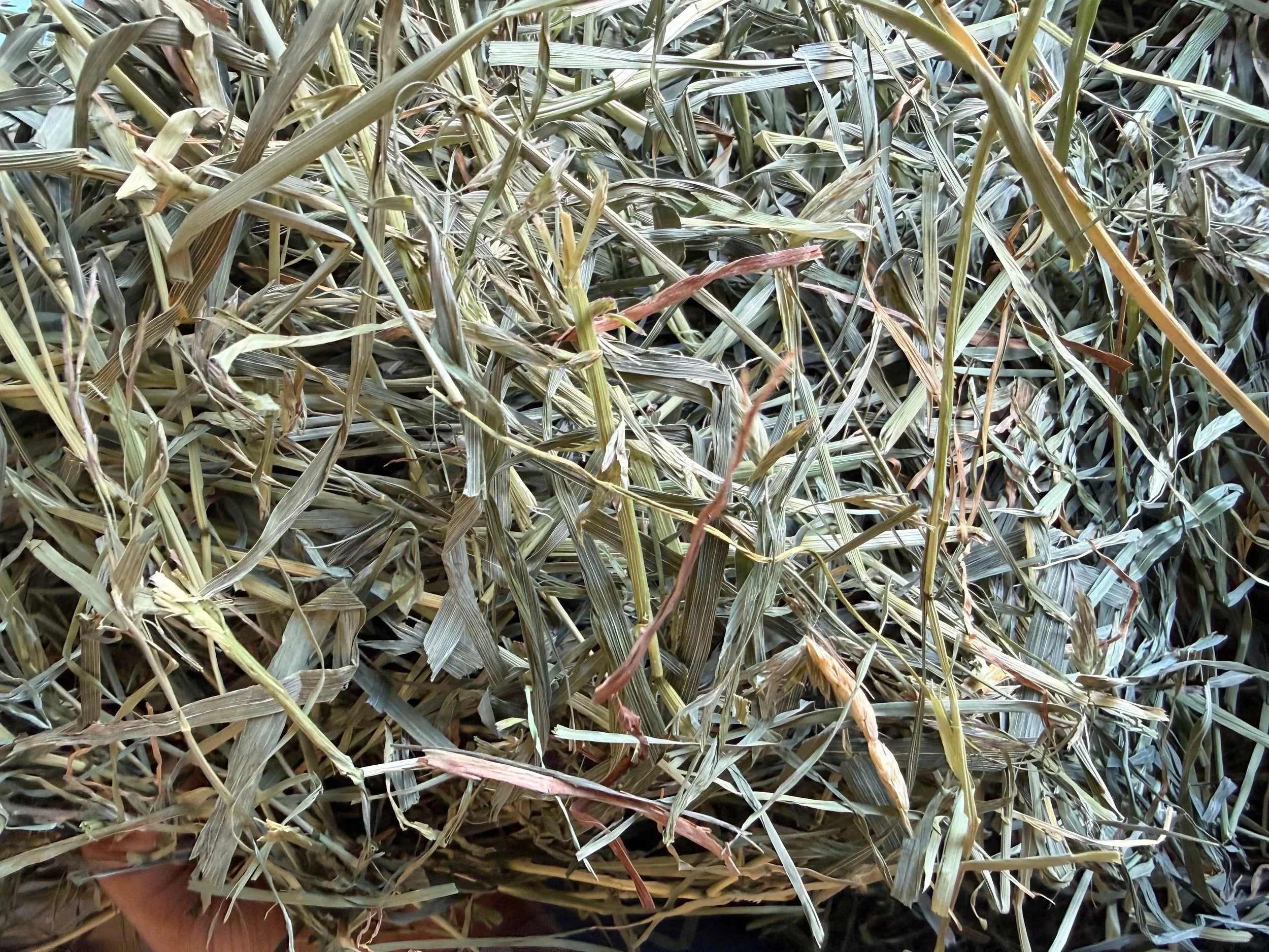
Softer, sweet-smelling hay that is often a darker green to brown than the commonly available timothy hay. Due to its softer texture, it may be preferred by rabbits with allergies or dental issues. Humans experiencing allergies to timothy hay also find orchard hay an easy alternative. Orchard hay is included in all of our SDHRS Mixed Boxes.
Meadow Hay
Composed of mixed grasses and plants, meadow hay is highly palatable and encourages natural foraging. It typically has a softer texture similar to orchard hay, but with shorter strands.

Oat Hay
Oat hay consists of large hollow cylindrical stalks and flat blades that are golden yellow to light green with oats on the end. The coloration and the presence of oats distinguishes this hay from others. Oat hay can vary widely in appearance and oat count, depending on the harvest season. New harvests are generally oat-laden, whereas later harvest such as Dec-Feb can be very light, with minimal oats. Many people confuse oat hay with straw due to similarities in coloration. Straw is not a food source, but is typically used for bedding, mostly in the horse and farming communities. Oat hay is an excellent source of fiber and makes a good topping/sprinkle over timothy and orchard hay. If a rabbit’s diet is high in oat hay, the pellets they produce may be larger, lighter in color, and look like sawdust if crushed.

Bermuda Hay
Bermuda grass hay is a good all around food source with a moderate amount of calories. Bermuda grass contains the same nutritional content as timothy or orchard grass, so these can be fed interchangeably. However, not all rabbits care for it very much. They don't find it as appealing as orchard or timothy hays.
Brome, Rye, Fescue, and Bluegrass Hay
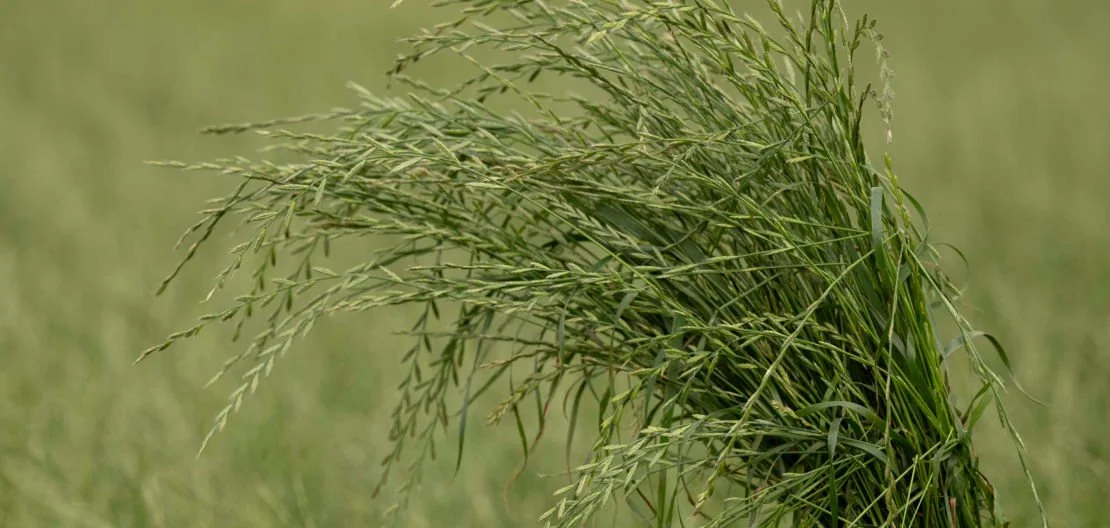
Less commonly available, but each of these grasses are excellent for mixing and adding variety to a rabbit’s typical hay blend. These grasses are commonly grown as lawn grasses and provided the occasional variety as additional enrichment may be fun for some rabbits.

Alfalfa Hay
Alfalfa hay is distinguished by stalks, usually brittle and flat green to brown leaves. Very high in calories and calcium, alfalfa hay can cause "sludge" in a rabbit’s urine. Watch for gummy droppings, weight gain, sludge, and cecal pellets not being eaten. Alfalfa hay can vary from dark lime green to yellow/green/brown depending on the season. SDHRS recommends a mixture of hay varieties, with alfalfa as an occasional supplement for young or elderly rabbits.
Understanding Hay Cuttings
Hay is harvested in different “cuts” throughout the growing season, each with unique characteristics:
1st Cut - coarse, stemmy
Nutrient profile: highest fiber, lowest protein/fat
Best for: overweight rabbits and those prone to G.I. stasis
2nd Cut - leafy, softer
Nutrient profile: balanced fiber, moderate protein/fat
Best for: most adult rabbits, good palatability
3rd Cut - leaf, very soft
Nutrient profile: lowest fiber, highest protein/fat
Best for: seniors, underweight or picky rabbits (when given in moderation)
Tip: Let your rabbit sample different types and cuts to discover their favorites. Mixing hay can stimulate appetite and prevent selective eating.
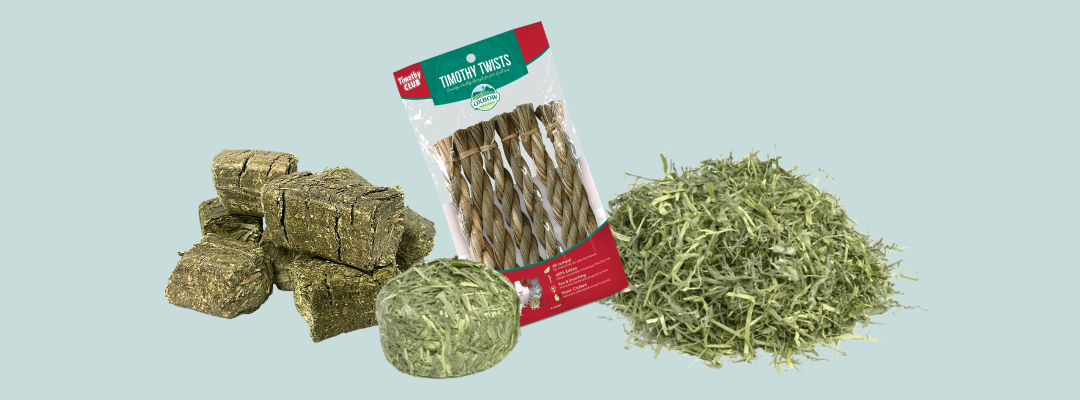
Hay Forms: Loose, Cubes, Stacks, and Twists
Loose Hay: The gold standard. Offers natural foraging and dental benefits.
Hay Cubes: Compressed blocks of hay (often timothy or alfalfa). Convenient for travel or storage, and can provide enrichment, but should never replace loose hay as the primary source.
Hay Stacks: Compressed, stackable forms of hay. Less messy and easy to store, but best used as a supplement or enrichment, not a replacement.
Hay Twists: Often hay compressed and twisted into a stick shape. Fun for chewing and play, but not a substitute for unlimited loose hay.
Various forms of hay can be incorporated into your rabbit’s diet...however, it’s crucial to ensure that the hay cubes are made from high-quality, pesticide-free grass hay, such as timothy hay, to provide the best nutrition for your rabbit.
Thank you for hopping along with us through the bunderful world of hay! Offering your rabbit a variety of hay types and cuttings not only adds flavor and fun to their meals but also supports their health with balanced nutrition throughout the various stages of their lives. Remember, every rabbit is unique, so it's important to determine the best hay for your furry friend in consultation with your rabbit-savvy exotic veterinarian. If you have any questions or need more tips on caring for your rabbits, don’t hesitate to reach out, we’re always here to help you and your rabbits thrive together.
Fresh SDHRS Hay Sources in San Diego County
San Diego House Rabbit Society offers freshly packed hays and grasses at a reasonable price, packed and distributed by local SDHRS volunteers. Purchasing hay at the locations listed below supports our rescue efforts and the veterinary care for our foster and shelter bunnies.
Plan ahead. Don’t let your hay supply run out before trying to buy more. Call ahead to see if there is hay; hay is sold on a first-come, first-served basis
North County
Diane Calkins - North County Hay Shed
1440 Paseo de las Flores
Encinitas, CA 92024
Phone: 760-633-1564
(Checks preferred.)
Open for pick up 24/7 - On your honor system
Central San Diego
SDHRS Bunny Store
4807 Mercury Street, Suite A
San Diego, CA 92111
Phone: 858-565-2869
(Corner of Mercury Street & Ronson Road)
Online orders only at www.shop.sandiegorabbits.org
Open for pick up 7 days a week:
12:00pm to 5 p.m.